Thursday, July 21, 2011

Review: IRREGULAR CREATURES, Chuck Wendig

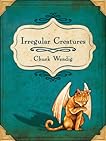
Irregular CreaturesIrregular Creatures by Chuck Wendig

My rating: 4 of 5 stars


I've been a fan of "Terrible Minds", Chuck Wendig's high-energy and hilariously profane writing blog, for a while now. So when I finally got my very own Kindle, this was one of my first purchases.

Irregular Creatures is a small collection of short stories in what I'd call the modern fantasy/horror genres. Some of them are quite strange, some are downright nasty, all of them are great fun to read. Wending combines the wild imagination of a Neil Gaiman, the squicky sensibility of a Clive Barker, and the direct, blunt-object-to-the-skull prose style of a young Harlan Ellison. Absolutely worth the download.


View all my reviews

Tuesday, July 19, 2011

Review: BECOMING QUINN, by Brett Battles

Becoming Quinn - A Jonathan Quinn Novella (Jonathan Quinn Thriller)Becoming Quinn - A Jonathan Quinn Novella by Brett Battles

My rating: 4 of 5 stars


One of the coolest things about the e-book revolution is that it's provided more openings for the shorter literary forms, like the short story and the novella. I've always enjoyed the novella form. It's a quick read, but there's more time to develop character and more chances to crank up the suspense than you can usually found in the short story.

Becoming Quinn is the novella done right. It's short, tightly written, full of action, but at the same time it gives you the opportunity to really get to know and to care about the main character as he makes his journey from idealistic cop Jake Oliver to become the hard-edged "cleaner" Jonathan Quinn.

Brett Battles also has the one indispensable gift for a thriller writer: he makes events that you would normally find absurd seem not only possible, but inevitable.

This book's a lot of fun. Check it out.


View all my reviews

Sunday, July 17, 2011

Default Will Destroy the Economy? Dude, That's What They WANT.

Latest Newspaper Column:

One of the more famous quotes of the Vietnam War era came out of a press conference when reporters questioned a U.S. Army major about the decision to use air strikes and artillery against a little town called Ben Tre, which was full of civilians as well as Viet Cong.

The hapless major eventually blurted out, “We had to destroy Ben Tre in order to save it.”

The quote was widely regarded as the perfect example of the lunacy of that war. But now, it seems that a group of Republican radicals is taking “we have to destroy it in order to save it” as their mantra. Except this time, it’s not an obscure hamlet in Southeast Asia that’s about to get flattened; it’s the American economy.

Think I’m exaggerating? Last week, South Carolina GOP Sen. Jim DeMint, discussing the recent debate on raising the debt ceiling, told Fox Business network that he was willing to accept “serious disruptions” in the U.S. economy to get what he and other conservatives want: tax breaks for the wealthy, cuts for the rest of us.

When CNBC host Carl Quintanilla asked Michele Bachmann, “Does it strike you that as the unemployment rate goes up, your chances of winning office also go up?” Bachmann replied with uncustomary honesty: “Well, that could be. Again, I hope so.”

A few days later, according to an article in The Washington Post, “hundreds of senior company executives and groups including the U.S. Chamber of Commerce and the Business Roundtable” sent a joint letter to the president and every member of Congress, urging them not to let the country default on its debt.

“A great nation — like a great company — has to be relied upon to pay its debts when they become due,” the letter read. “Treasury securities influence the cost of financing not just for companies but more importantly for mortgages, auto loans, credit cards and student debt. A default would risk both disarray in those markets and a host of unintended consequences.”

The letter did not, it should be noted, ask for any increase in the debt ceiling to be linked to tax or spending cuts.

Sen. Mitch McConnell also advised his party not to allow such a default. Not because such a thing would be a catastrophe for the economy, but because it would be politically bad for the Republicans.

“I refuse to help Barack Obama get re-elected by marching Republicans into a position where we have co-ownership of a bad economy,” McConnell told right-wing talk show host Laura Ingraham. “If we go into default, he will say Republicans are making the economy worse. … That is a very bad position going into an election.”

It’s not a bad economy that bothers McConnell, you see. He and his rich buddies will be doing fine whatever happens. But the possibility that it might affect their election chances — that really makes him sweat.

So, in a crass display of pure politics, McConnell proposed a plan that wouldn’t require tax or spending cuts. What it amounted to, basically, was, “We’ll let Obama raise the debt ceiling with a stroke of his pen while we shake our fingers at him disapprovingly, then run off to make attack ads about it.” It was a nakedly cynical ploy, but at least it would keep us from defaulting.

Nope, said House Majority Leader Eric Cantor, current figurehead of the radicals in the House. “Currently, there is not a single debt limit proposal that can pass the House of Representatives,” Cantor said in a statement Wednesday. This, after President Obama made such sweeping offers of cuts, including cuts in entitlements that had previously been regarded as taboo, that his own party was screaming blue murder.

The offer would, in the words of conservative columnist David Brooks, create “trillions of dollars in spending cuts in exchange for a few hundred billion dollars of revenue increases.” Brooks called accepting the proposals “the mother of all no-brainers.” Not only have the House Republicans said no, but they’ve also lied and claimed that the president hasn’t even proposed a plan at all.

So it’s clear that default, and the “serious disruptions” that will come with it, are what nihilists like Bachmann, Cantor and DeMint want. Unlike McConnell, they’re gambling that a wrecked economy will reap electoral benefits for them in 2012. They truly are ready to destroy the village in order to “save it.”

Problem is, that village is where we live, and you and I aren’t the ones they’re talking about saving. We’re going to be the collateral damage.
Sunday, July 10, 2011

Review: THE PARADISE PROPHECY by Robert Browne

The Paradise ProphecyThe Paradise Prophecy by Robert Browne

My rating: 5 of 5 stars


A tough and savvy female intelligence operative teams up with a brilliant but burned-out academic to investigate the unexplained fiery death of an international pop star. They discover a plot by a crew of fallen angels who are scheming to open the gates of Hell itself and bring on the end of the world. The key to mankind’s survival lies in the seven missing pages of a book known as the Devil’s Bible--and in a mysterious entity known as the Telum.

In lesser hands, this could have been a really silly book. But Rob Browne keeps the story moving at a rip-roaring pace as his protagonists chase the mystery around the globe and beyond, up to a final climax that goes about as big as you can imagine.

There is, by the way, a rather interesting cosmology here. It’s not quite what you may have learned in Sunday school, but I have to admit, it fits the available data.

This is one of those books that hooks you and pulls you along with it right to the end. Think The DaVinci Code, except with good writing and characters who act and talk like actual people. I highly recommend it.

View all my reviews

Wednesday, July 06, 2011

Casey Anthony Outrage, Part II: Now They Tell Us

 From what's sure to be only one of hundreds of "how did this happen" articles...


The government failed to establish how 2-year-old Caylee Anthony died and they couldn't find her mother's DNA on the duct tape they said was used to suffocate her. There was conflicting testimony on whether the putrid smell inside the family's car was a decomposing body or simply trash, and it was never quite clear why chloroform was so important.

Now, as I said below, I haven't been following the coverage of the trial...but were any of the media pointing this out before the verdict? Because that stuff seems pretty important, especially not being able to establish cause of death. I'd venture to say there's no way to get a murder verdict without that.

Like I said before...if they were so anxious to spin the "guilty, guilty, guilty" narrative that they didn't report that, then maybe it's the reporters you should be mad at for not doing their damn jobs (not to mention the prosecutors who tried a weak case they should have pled).

Oh, well. On to the next outrage. 

Tuesday, July 05, 2011

Why I'm Not Outraged at the Casey Anthony Verdict

When you're an attorney, especially if you do criminal law, people are always asking you: "what do you think of the [insert name of latest high profile defendant here] trial?" It's been especially intense for some reason during this latest blockbuster trial, that of Casey Anthony, who was charged with killing her daughter Caylee. The question is often followed up with "you can't possibly think she's innocent, can you?"


 My answer, as always, is: I have no idea. I haven't heard any of the evidence.  I've seen trials, then seen coverage of those same trials.   And I know for sure that, if your only knowledge of the case is what you've seen on TV or read in the paper, you haven't heard all the evidence. It's impossible. Trials go on for days, sometimes weeks, and what you see in the mass media is a thirty second, at most, glimpse of what went on. Unfortunately, those tidbits you're fed are  picked by someone who's looking, not for the most important facts, but for the most dramatic or sensational ones. 


The media are not interested in justice; they're interested in eyeballs on the page or screen. For that reason, frankly, they often do  a piss-poor job of  covering criminal trials. Reporters  make up their minds early on, construct a narrative around their preconceptions, and the decision on what to tell you is invariably bent around that narrative. And they've all apparently decided that "guilty! guilty!  guilty!" is the narrative most likely to sell, unless a case falls so completely to pieces and starts to stink so bad  they can't ignore the stench  any longer. 


 I'm not just talking about Nancy Grace, who's only the most egregious example. Court coverage in general is abysmal, and I haven't seen any yet that even bothers to give lip service to the concept of "innocent until proven guilty." 


 This is why I never follow the latest "trial of the century." I know I'm not getting all the information I need to make a decision. I'm getting only those parts of the story that some reporter thinks will get tongues wagging around the water cooler the next day so you'll come back that evening and watch some more.  


The only people who heard all the facts in that case are the people in that courtroom. What they found important may have been light-years removed from what some reporter or paid "legal expert" on the news found important  enough to tell you. So none of us are in a position to be screaming that the jurors were stupid or that justice was not done. That's why I'm not outraged that Casey Anthony was acquitted, because I can't decide on whether she killed her daughter or not based on what's on TV.